Tallies: the small leaves that give volume to bobbin lace
Tallies: the small leaves that give volume to bobbin lace
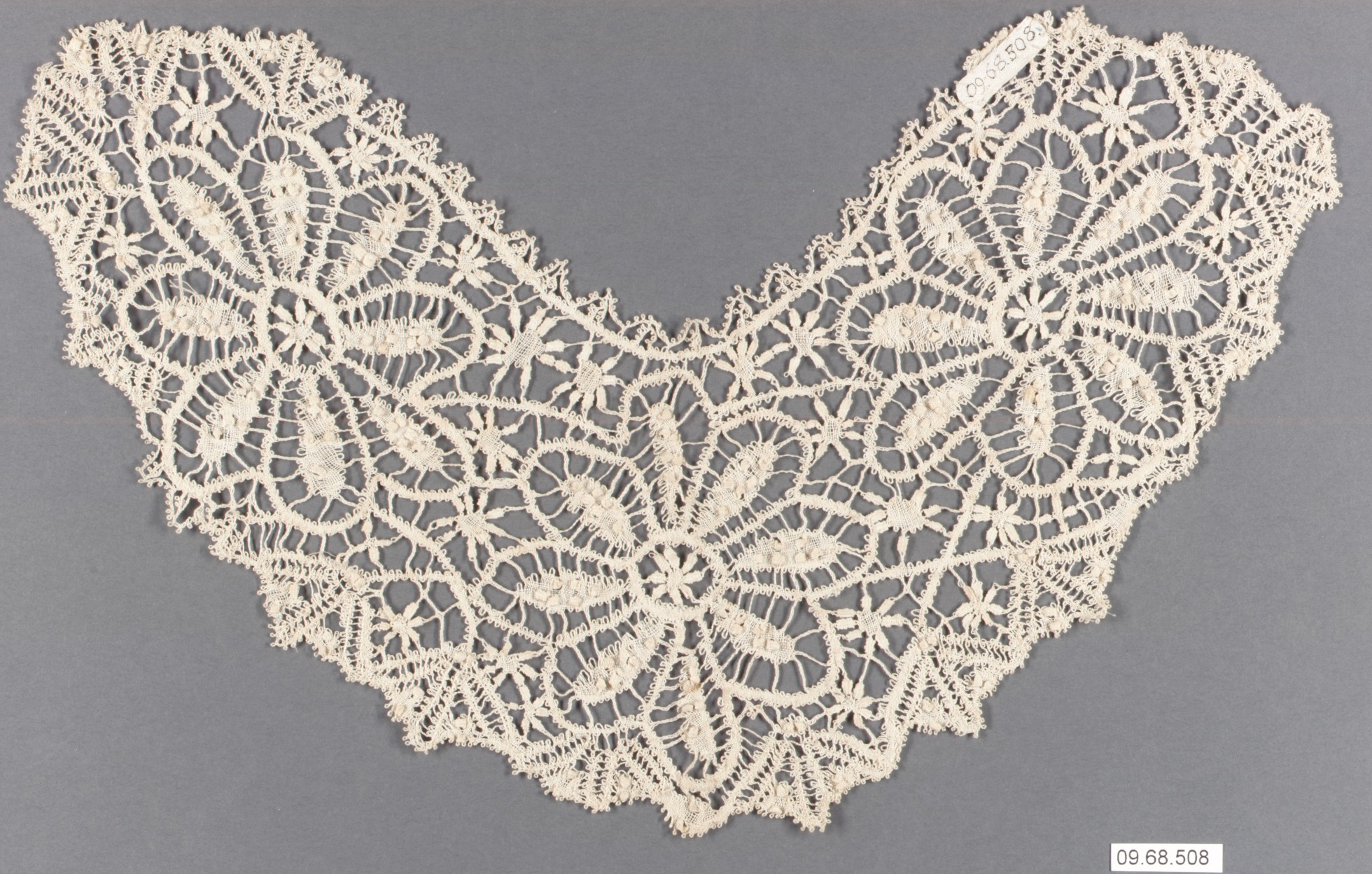
Among the nets, braids, and ribbons of bobbin lace, small, compact shapes sometimes appear, resembling leaves, almonds, or grains of wheat. In many international manuals, they are called talliesDepending on their shape, they are also described as leaves, cucumbers, or ears of corn. They are tiny, but they attract attention because they concentrate the thread and give relief to a piece that, around them, seems almost made of air.
The lacework is typically made with two pairs of bobbins, that is, four bobbins. While one pair acts as the base, the other moves back and forth, weaving very short passes. The lacemaker gradually opens the lace, maintains its width for a few turns, and then closes it, gathering all four threads together again. The result can be flat or slightly raised, with pointed or square ends.
The difficulty lies not in memorizing a long sequence, but in distributing the tension. If you tighten it too soon, the blade becomes narrow and stiff; if the threads loosen, gaps or uneven edges appear. Each pass must fit snugly against the previous one. That's why razor blades are a good exercise in patience: they force you to watch the thread, feel its resistance, and make small adjustments before continuing.
The names change between countries, schools, and translations. The Australian Lace Guild explains that wheatearLiterally an ear of wheat, it is another name for the leaf-shaped blade. It also distinguishes varieties such as the floating blade, which starts from two different points in the pattern, the square-ended blade, and the so-called cucumber tally, longer. The names mainly describe the silhouette and the way in which the piece is linked with the rest of the lace.
Not all the leaves are meant to mimic a plant. A single leaf can close a space between two braids; several together form a flower, a star, or an ear of wheat. In other designs, they become a rhythmic chain that guides the eye along the edge. Their density creates a useful contrast: next to an open mesh, they appear more solid, and when they catch the light, they cast a minimal shadow that makes the relief visible.
Museum collections demonstrate the variety of uses. Sydney's Powerhouse Museum holds an early 20th-century Torchon sample from St. Helena, whose X-shaped pattern incorporates four leaflets. In a piece by Idrija from 2002, leaflets form flowers and leaves among the ribbons. Another work by Honiton, dated around 1910, combines whole stitch, half stitch, joining braids, and leaflet fillings.
They are also characteristic of braided laces such as Bedfordshire and Cluny. In Bedfordshire, they can be grouped like small ears of wheat enlivening curved stems. In Maltese lace, they interact with the familiar eight-pointed cross and silk ribbons. In Cluny, they appear among braids and coils, adding mass to geometric compositions. The same motif changes character depending on the thread, scale, and design.
Look for a compact form that is neither a wide ribbon nor a simple braid. Up close, you can see tight strands running from one edge to the other, widening in the center. In the 19th-century Bedfordshire cuff held by the Metropolitan Museum of Art, these small, dense areas are repeated between curves and open bridges. The high-resolution photograph allows you to appreciate how each one functions as a distinct brushstroke within the design.
A well-made leaf typically features regular edges, a full center, and a clean transition to the threads that hold it in place. However, regularity doesn't mean they all have to be identical. On a flower, they can open wider; on an ear of wheat, they can bend to follow the stem; in a contemporary design, they can grow to become the main motif.
The leaves serve as a reminder that bobbin lace is not solely dependent on the perforated pattern. The pattern indicates where the shape begins and ends, but the lacemaker determines its volume through the tension of each stroke. Two people can work the same perforation and obtain slightly different leaves—rounder, thinner, or taller.
Perhaps that's why they are so expressive. They are made from just four threads and take up very little space, yet they combine technique, touch, and rhythm. When we look at lace up close again, those tiny almonds will be easy to find: they are the points where the net breathes deeply and the thread seems to transform, for an instant, into a leaf.
© El Mundillo de Eva 2026