Stourbridge 2026: Fans and handkerchiefs tell the story of lace
Stourbridge 2026: Fans and handkerchiefs tell the story of lace
An open fan can resemble a small lace structure; a handkerchief, a garden folded in quarters. Even the January 29, 2027The Lace Guild brings both objects together at its Stourbridge headquarters to show how fashion turned threads, rods and fine linen into symbols of elegance, family memories and authentic works of patience.
The exhibition "Fans and Handkerchiefs" It can be visited at The Hollies, the home of The Lace Guild at 53 Audnam, Stourbridge. It began on September 19, 2026, and offers a tour of some of the finest pieces in a collection that includes more than fifty fans and fan patterns, as well as more than four hundred handkerchiefs, corners, and borders.
It's not just about admiring beautiful objects. The selection helps us understand how lace was adapted to very different forms. On a fan, the work had to follow the arc of the sticks, open without losing its pattern, and maintain an almost ethereal lightness. On a handkerchief, the edge had to resolve four corners and complement a fabric as fine as linen or silk.
During the Georgian and Victorian eras, fans and handkerchiefs adorned with lace were fashionable accessories and symbols of social status. Fans served to alleviate the heat in salons and gatherings, but they also complemented attire and offered a perfect space to display valuable materials. Some leaves were made entirely of lace; others incorporated motifs on satin and were mounted on sticks of bone, tortoiseshell, or ivory.
The exhibition brings together techniques beloved by lacemakers, including Bucks Point, Chantilly, and Honiton, alongside Point de Gaze needle lace. Comparing them in the same context allows us to appreciate their distinct personalities: the delicacy of the English backgrounds, the shadow of the black silk, the flowers worked individually, and the meticulous relief of the needlework.
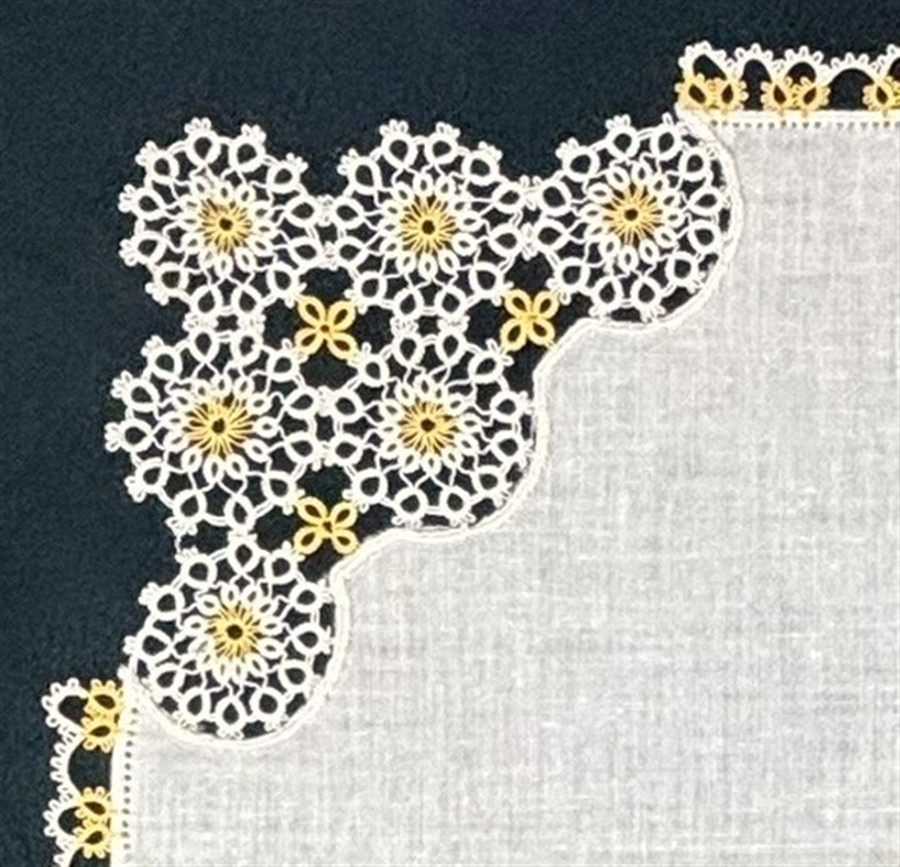
The handkerchief seems like a simple piece until we follow its edge. A straight lace trim can be gathered, folded, or mitered to frame the corners. With the resurgence of lacemaking as a hobby in the 1970s and 1980s, designs that already incorporated a specially designed corner became popular. This allowed the pattern to turn cleanly without interrupting flowers, waves, or backgrounds.
For bobbin lace makers, these small changes are fascinating. A corner forces you to rearrange pairs, decide where to increase the space, and maintain the rhythm of the design. Looking at historical handkerchiefs is also a technical lesson: each solution reveals how its creator resolved geometry and beauty without sacrificing the softness required of an accessory meant for the hand.
The hollies It is usually open from Wednesday to Friday. 10:00 - 15:00Admission is free, and donations are welcome. The Lace Guild recommends calling before traveling, as it is a volunteer-run organization and may close unexpectedly. Visits are by appointment on Saturdays or during special events.
The exhibition hall, library, and shop are located on the ground floor. There is rear access via a level wheelchair ramp and an accessible toilet; those requiring specific assistance should notify us in advance. The venue has a small car park accessible from Junction Road and is also reachable by buses 16 and 17 from Stourbridge or Wolverhampton.
Stourbridge offers the opportunity to extend your visit with another traditional craft. Its historic Glass Quarter brings together museums, workshops, and canals linked to more than four centuries of glassmaking. Red House Glass ConeBuilt in the late 18th century and used until 1936, it is one of only four complete canal cones remaining in the UK. Entry is free, and its canalside setting is perfect for a stroll.
Lace and glass share more than meets the eye: both transform simple materials through knowledge, repetition, and a special sensitivity to light. This exhibition offers a wonderful opportunity to explore this. Between unfolding fans and folded scarves, each piece reminds us that small objects can also hold a vast story.
© El Mundillo de Eva 2026