Ret fi: the delicate white lace that bears the name of Arenys
Ret fi: the delicate white lace that bears the name of Arenys
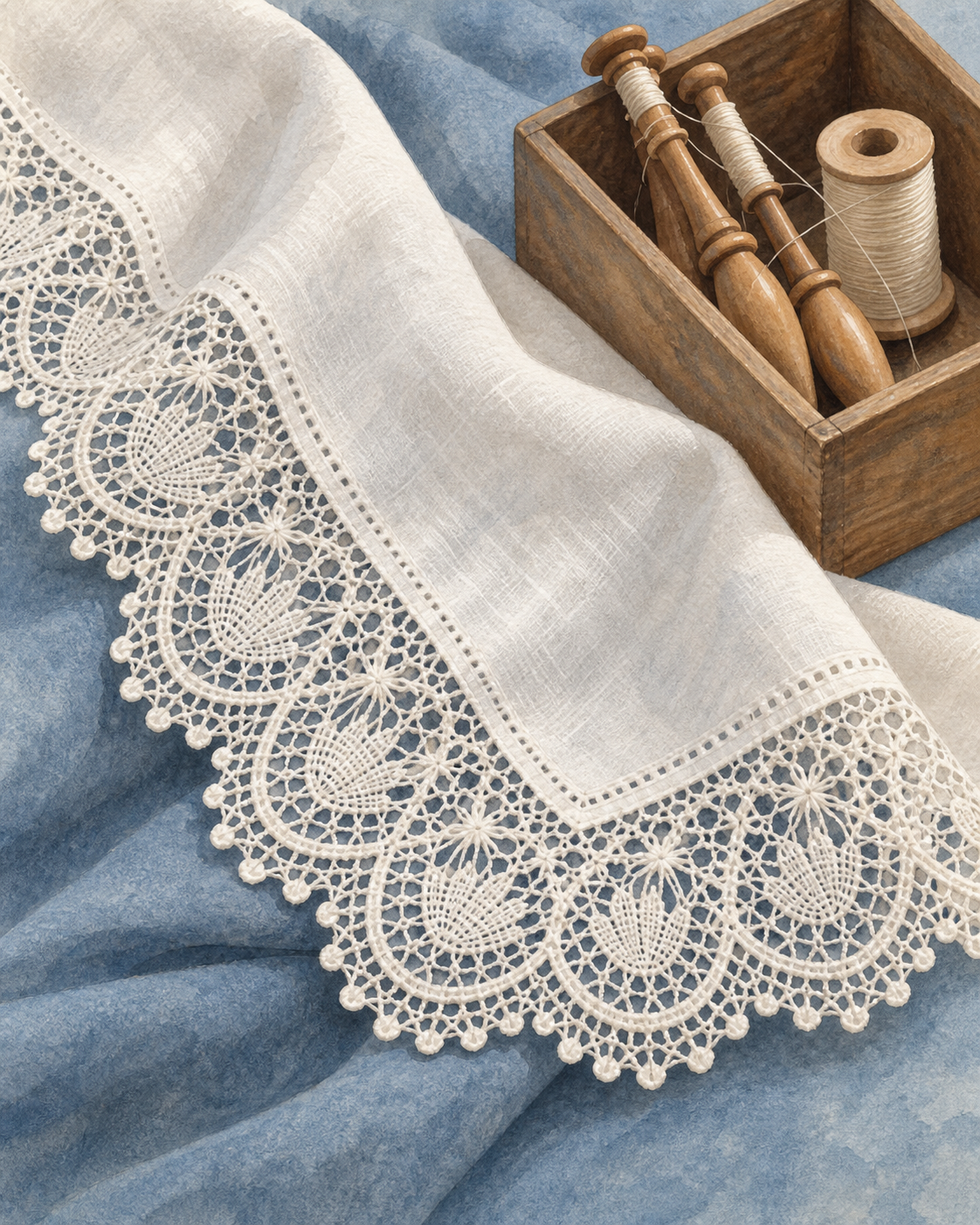
There are laces that invite you to get a little closer. From afar they look like a white cloud; upon closer inspection, the mesh, the tiny designs, and all that work that weighs almost nothing but takes so many hours become apparent. ret fi, also known as Punta de ArenysIt belongs to that delicate world. Its story takes us to the Maresme region and offers us a very personal getaway: discovering a place by following the thread of its bobbin lace.
La Guide to the Museu Marès de la Punta on Visitmuseum The development of ret fi is placed between the late 18th and early 19th centuries. It is a white lace, made with cotton or linen, that originated in a region with a long tradition of fine lacemaking. Arenys gave it its name, although to understand it, one should look to both Arenys de Mar and Arenys de Munt.
Its connection to other European crafts helps to situate it: the same guide links its geometric designs to techniques such as those of Lille, Mechelen, or Tønder. It's lovely to think that, even when each locality cultivated its own way of working, the lace also shared a common language. A piece could have its own distinctive character and, at the same time, converse with others made far away.
El Arenys de Munt Town Hall It describes a variety of lace with a tulle background, adorned with punt d'esperit and worked with very fine white cotton thread. It also mentions the use of linen and distinguishes these materials from silk. These are details that help us look beyond the impression of delicacy.
To appreciate it, you don't need to recognize every single stitch. You can start by observing how much space the design occupies and how much it leaves uncovered, how the edge is defined, or where your eye is drawn. If you do bobbin lace, you'll likely have questions about tension and the thread's path. If you don't, simply dedicate a few minutes to it: such intricate work appreciates your attention.
The municipal history recalls the randersMerchants traveled from town to town buying lace from the lacemakers. Some also drew and prepared patterns. Thus, the work of bobbin lace formed part of a network involving hands, designs, and sales. The delicacy we admire today was linked to the livelihood of many families.
The historical exhibition A sea of tulleThe exhibition, which ran until May 2021, explored the technical, artistic, social, and economic dimensions of ret fi. The museum focused on the anonymous women who wove it, those who sold it, and those who could afford to buy it. Remembering this shifts our perspective: behind a beautiful border, there was also work and necessity.
That's why it's worth asking about the people, as well as the stitches. Who drew that piece? Who made it? What was its purpose? Sometimes a card holds the answers, and other times there are gaps. Respecting those silences is also a way of preserving the memory of the lacework.
To continue this story, the Museu Marès de la PuntaLocated in Arenys de Mar, the shop offers a journey through lacework from different eras and origins. It opened its doors on March 13, 1983, featuring the Frederic Marès collection. Among the items on display are collars, scarves, fans, mantillas, and shawls: various ways to incorporate lace into everyday life and special occasions.
The museum also houses works from Casa Castells, active in Arenys de Mar between 1862 and 1962, and designs related to their creations. Seeing a drawing next to a finished piece is a good invitation to pause and reflect. Between the two lie decisions that a quick glance cannot reveal.
If you're organizing a visit, check the museum's current information beforehand and set aside some time without rushing. There's no need to turn the outing into a lecture: you can choose a piece, focus on a detail, and come away with a question to discuss later with your colleagues.
Perhaps that's the best company to take home: a new curiosity. The ret fi brings us closer to a specific tradition, but it also reminds us of something familiar. In lace, what seems light can hold a great deal of history. The next time we look at a white lace edging, perhaps we'll linger a moment longer, searching for the tiny pattern that had previously escaped our notice.
© El Mundillo de Eva 2026