Picots: the small bows that add rhythm to the edge of the lace
Picots: the small bows that add rhythm to the edge of the lace
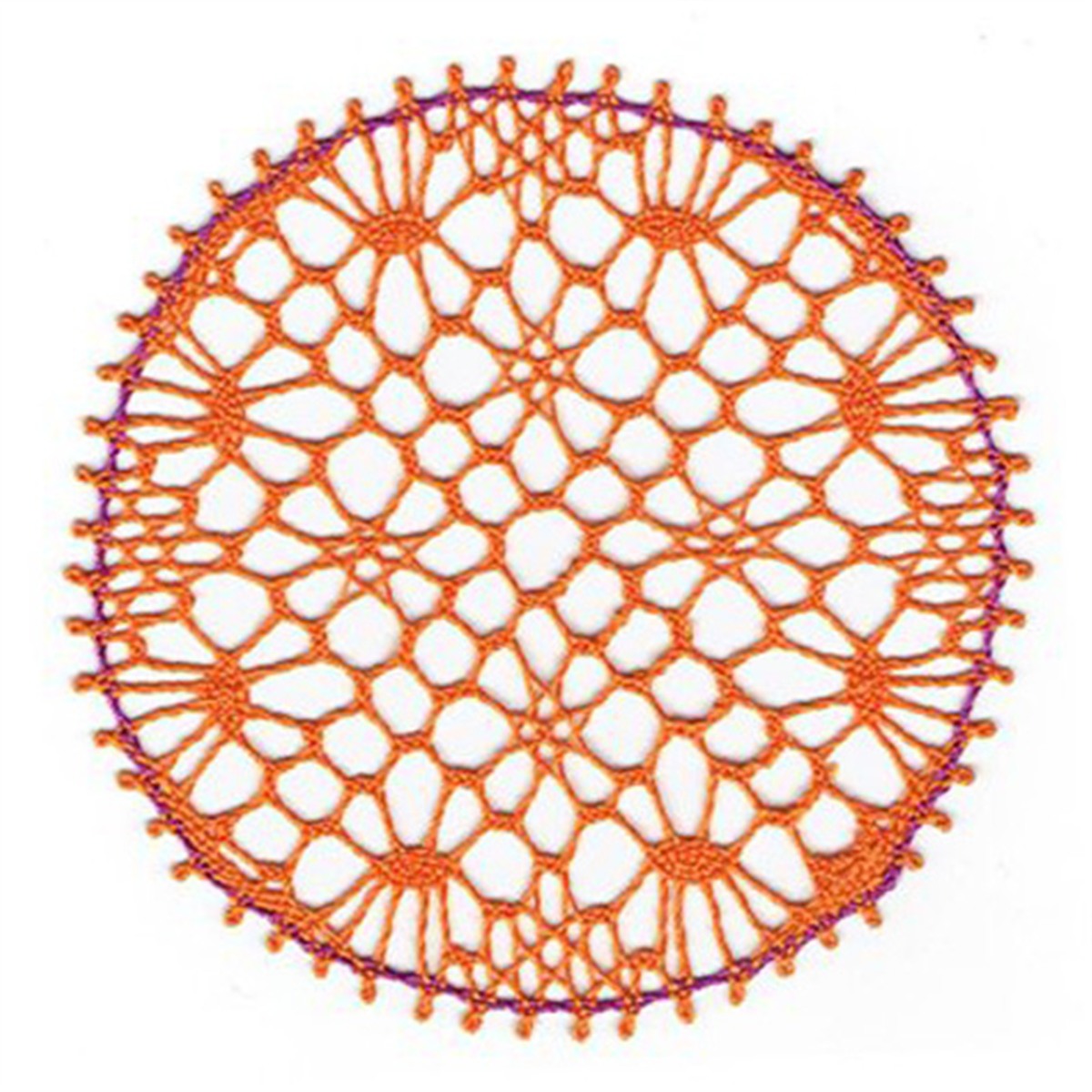
Tiny loops appear along the edges of some lace patterns, seemingly holding a drop of air. These are picots: small loops made from the yarn itself to decorate an edge, enliven a braid, or soften the join between bars and motifs. Their size is modest, but a well-spaced row can completely transform the character of the piece.
Picot lace is not sewn on as a separate embellishment at the end. It is created during the lacemaking process and becomes integrated into its structure. Depending on the type of lace, it may appear on the outer edge, over a braid, or on a bar joining two sections. Sometimes it is used alone; other times, it is repeated as a small ring around the main design.
Its name is used in several textile techniques, so it's important to consider the context. In bobbin lace, it refers to a deliberate loop, held by the threads of the work and formed with the help of a pin. It shouldn't be confused with an accidentally caught thread or a worn edge.
A perfectly straight edge can give lace a serene and firm appearance. Picots introduce a different sensation: they create a succession of small highlights and shadows, break up the line, and complement the movement of scallops, leaves, or fans. If they are all of a similar size, the eye reads them like a compass.
They also have a transitional function. A loop can make a braid appear less rigid or add presence to a very fine bar. In guipure lace, where motifs are joined without a continuous network, these raised points enrich the empty spaces without filling them completely.
To form the loop, a pin is used as a temporary support. The threads wrap around this point following the style's characteristic sequence, and when the pin is removed, a small loop remains. The gesture seems simple, but the regularity depends on three things: the position of the pin, the amount of thread left, and the tension with which the structure is closed.
If you pull too tight, the picot shrinks and can blend in with the trim. If it's too loose, it tilts or loses its shape. The difference between a neat and a messy picot is often just a few millimeters. That's why it helps to compare each picot to the previous one before moving too far.
The picots make it necessary to know which pair is working and which threads should continue next. Keeping the bobbins grouped in pairs prevents the wrong thread from entering the loop. It is also advisable to place the pins straight and check that the braid or edge does not narrow when tightening.
For practice, a short sample is better than a large strand. Repeating several loops with the same yarn allows you to observe how the size changes as you vary the tension. A contrasting base color and side lighting highlight differences that might otherwise go unnoticed against a white background.
Museum collections show that these small loops traveled through very different styles. Powerhouse holds two borders of Mechelen lace, made in Flanders around 1840, with a scalloped edge decorated with picots. The design combines pineapple shapes, bouquets, linen stitch, half stitch, outline thread, and various backgrounds. Loops adorn the outer edge, while a straight engrelure occupies the foot.
In another piece from the same collection, a Maltese lace tablecloth brings together braids, foil, joining bars, and picots. There, the loops coexist with more robust elements, helping to articulate the ornamentation. The comparison serves as a reminder that a simple technique can be adapted to very different visual languages.
The Lace Museum includes picots in one of its advanced workshops in Torchon. The project is a round medallion worked with eleven pairs of pearl cotton. In addition to the loops, the exercise covers spiders, corners, joins, and the order in which the different sections should be worked.
Choosing a medallion is not accidental: its circular shape makes any change in distance or tension highly visible. When the picots are the same size, they surround the piece like a delicate border. If one is wider than the others, it immediately breaks the continuity and indicates where corrections are needed.
Learning picot lace sharpens both your hands and your eye. It forces you to measure without a ruler, distribute tension, and think of the edge as a living part of the design. After recognizing them, the antique lace reveals a new layer of work: tiny loops that someone formed one by one, maintaining the rhythm for hours.
Perhaps that is its greatest beauty. A picot takes up hardly any space, but it demonstrates that in lace, nothing is insignificant. Even the finest edge can become a design when the thread knows where to stop and let the light pass through.
© El Mundillo de Eva 2026