Storing bobbin lace: five tips to make it last for generations
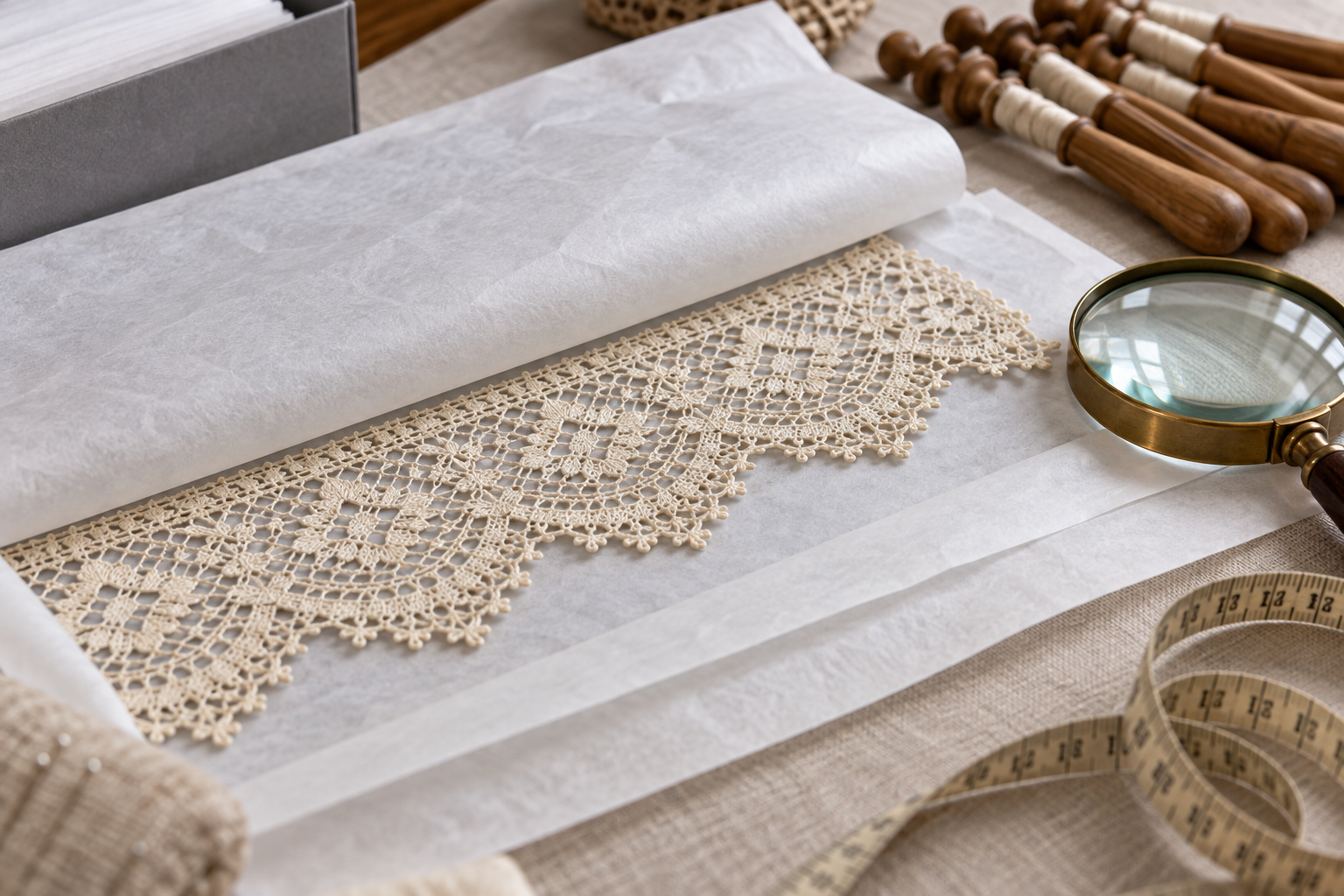
A piece of lace doesn't end its story when the last pins are removed. Then come other, less visible actions: folding it, putting it away, taking it out to show it off, and putting it back in its place. These routines largely determine its future. The thread may be strong, but light, dust, humidity, and repeated folding eventually leave their mark. Museums that preserve textiles offer very useful tips for caring for lace, a handkerchief, or a family heirloom at home.
The first step is observation. Before washing or ironing, check for broken threads, weakened areas, old stains, sewn-on embellishments, or discoloration. A photograph and a simple note about the measurements help you remember the garment's condition. It's also a good idea to note the type of thread, if known, and any associated history: who made it, what it was used for, or when it was last stored.
This brief information sheet helps prevent hasty decisions. A recently crafted and sturdy piece doesn't present the same risks as an antique silk or lace that has been on display for many years. If the fabric crumbles when touched, has significant losses, or holds special historical value, it's wise to consult a textile conservator before proceeding.
Natural light and some artificial light sources can weaken the fibers and alter the colors. Therefore, delicate pieces should be stored in a dark or dimly lit place, away from a sunny window. For home display, it's best to alternate short periods of display with periods of rest. Dust is also abrasive: it gets trapped between the fibers and, with movement, can wear them down.
A closed display case or a suitable box offers more protection than an open shelf. It's not necessary to turn every piece of work into a museum piece, but it is important to avoid leaving it exposed for months in a high-traffic area, next to a greasy stove, or near a heat source. Preventative conservation begins with minimizing these small, daily exposures to damage.
The Smithsonian recommends storing textiles clean, unstarched, and preferably flat, minimizing folds and pressure. For lace, a pH-neutral storage box and acid-free white tissue paper are safe options. Newspaper, ordinary cardboard, uninsulated wood, and colored papers can transfer substances or pigments to the lace.
If a large piece needs to be folded, it's best to quilt the folds with soft strips of washed fabric and change their position occasionally. Very delicate projects can be rolled onto a wide tube covered with clean, neutral material, always without tightening it. The idea is to let the yarn rest, not to subject it to new tension for years.
Sealed plastic isn't a good permanent solution. Fluctuations in humidity can cause condensation and promote mold growth, while some plastics age and release compounds that shouldn't come into contact with the fibers. A breathable wrap and a dustproof box that isn't airtight are better.
Stability matters more than chasing a perfect temperature. The Smithsonian recommends an environment of approximately 18–21°C and a relative humidity of 40–50% for textiles, but in a home, the essential thing is to avoid sudden temperature changes, damp basements, and extremely hot attics. The box should be checked periodically, the item aired out, and it should be inspected for insects, new stains, or warping.
Water is not a universal solution. The Victoria and Albert Museum explains that even cotton lace can become misshapen during drying and that a piece of silk should not be bleached. Antique or weakened lace should not be washed at home without first assessing its fibers, dyes, and joins. When cleaning is necessary, the treatment should include drying flat and carefully, without wringing or hanging the wet piece.
Ironing is not an automatic solution for restoring the shape either. The heat and pressure can flatten the relief, accentuate the threads, or enlarge a tear. In conservation, specific supports and techniques are used to restore the shape while it dries; at home, in the case of significant deformation, it is best to seek professional advice.
Preserving lace doesn't mean hiding it away forever. It means alternating moments of enjoyment with breaks, handling it with clean hands, and creating a space where time seems to slow down. A well-chosen box, a leisurely inspection, and less exposure to light can make all the difference. Every time we store a piece with care, we also protect the story of the person who made it and leave open the possibility for others to admire it again.
Sources: Victoria and Albert Museum, care of antique dresses and veils, Smithsonian Institution, storage of ancient textiles y The Metropolitan Museum of Art, conservation and handling of objects.
© El Mundillo de Eva 2026