Getafe 2026: the Visitación Ballesteros meeting brings together the art of bobbin lace
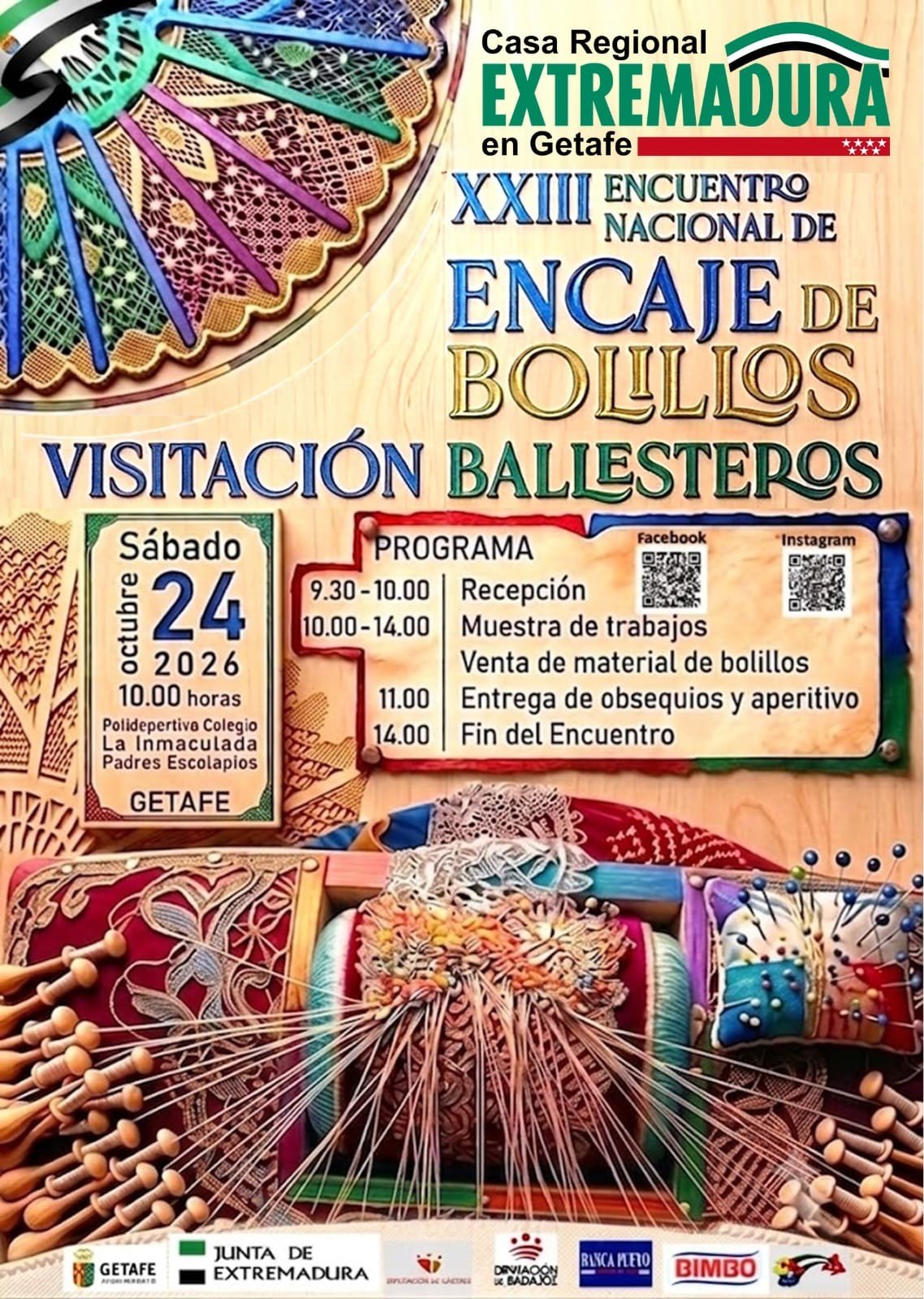
Getafe 2026: the Visitación Ballesteros meeting brings together the art of bobbin lace
Getafe will once again host lacemakers, bobbin lace makers, and craft enthusiasts from around the world on Saturday, October 24, 2026. The 23rd National Bobbin Lace Meeting, "Visitación Ballesteros," will be held at the sports center of the La Inmaculada-Padres Escolapios School. It will be a morning dedicated to working together, showcasing finished pieces, finding materials, and keeping alive a tradition that has united the Madrid city with Extremadura for decades.
The day will begin with participant registration between 9:30 and 10:00. Following this, the exhibition of works and the sale of specialized materials will open. The program was released by The Bread ShopOne of the participating establishments also announced a gift giveaway and refreshments at 11:00. The event will conclude at 14:00.
During those four hours, the tables will allow participants to watch the lacemaking process unfold. This is one of the best ways to discover it: first, many loose threads appear; then, the pairs cross, twist, and are pinned together to form an orderly network. Those who already practice can compare solutions and ask about a more complex lace pattern. Those who approach for the first time will see that behind each piece there is rhythm, concentration, and a great deal of shared experience.
The program is concentrated in the morning, so it's best to arrive early to browse the tables at your leisure. If you're looking for a specific thread, bobbins, pins, or any other tool, it might be helpful to note down the necessary measurements and references beforehand. The vendor stalls complement the event, allowing you to touch materials, compare thicknesses, and receive guidance before starting a new project.
The event is named after Visitación Ballesteros, who was associated with the lace-making workshop at the Extremadura Regional House in Getafe. The digital archive of Getafe Museum It preserves the history of the group: the workshop was founded in 1989 under her direction and the first national meeting was organized in 2002. From the beginning, associations and lacemakers from various communities participated.
This connection explains why the event is more than just an exhibition. Many families from Extremadura who moved to Madrid brought with them their crafts, songs, recipes, and customs. In the workshop, they found a place to pass them on and adapt them to a new city. The lacemaking techniques of Acebo and Hinojosa del Valle are mentioned in old publications of the Regional House, along with other techniques practiced by its students.
A careful visit can begin with the tools. There are round, cylindrical, or flat cushions; long or short bobbins, plain or decorated; threads of linen, cotton, silk, and modern fibers. Then comes the design. Some pieces are worked on a geometric grid, while others form flowers, leaves, ribbons, or large transparent surfaces. The position of the pins and the number of pairs offer clues to the complexity.
It's also worth observing the hands without interrupting the movement. Each lacemaker develops her own way of arranging the bobbins, tightening the threads, and reading the pricking pattern. At a national gathering, these subtle differences are shared. A conversation around the table can resolve a technical question that has been unresolved for weeks.
The finished pieces complete this interpretation. A lace trim might show how a motif is repeated; a fan requires adapting the design to a curve; a handkerchief needs to resolve the corners without breaking the rhythm. Asking about the time it took to make them, the number of pairs, or the origin of the pattern opens up very interesting conversations and acknowledges the knowledge each participant possesses.
Those arriving from out of town can take advantage of the afternoon to stroll through the historic center. Cathedral of St. Mary Magdalene Construction began in 1549 on the site of an old Mudéjar hermitage, and the original tower remains. Another option is to visit the Cerro de los Ángeles (Hill of the Angels), where the hermitage of the local patron saint and the Monument to the Sacred Heart are located.
The 23rd "Visitación Ballesteros" Meeting thus offers a morning of learning and camaraderie. Each craft will tell a different story, but all will share the same sound: that gentle tapping of wood that announces that the thread continues to become a living heritage.
© El Mundillo de Eva 2026