Engrelure: the small foot that protected the most valuable lace
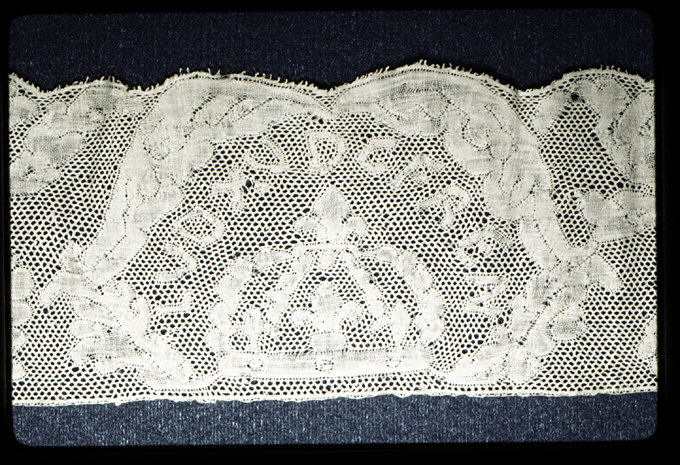
Engrelure: the small foot that protected the most valuable lace
In lace, the eye is usually drawn to the flowers, the netting, or the scalloped edge. However, a much more discreet strip can be hidden beneath the fabric. It's called engrelure, or foot of the lace, and its mission was as practical as it was ingenious: to facilitate sewing and to protect the valuable part when the ornament was transferred from one garment to another.
A lace trim has two edges with different techniques. The outer edge, sometimes wavy and full of picots, is visible. The inner edge needs a firm, even line to allow the lace to be sewn to the fabric. This straight area is called the hem. jogging; in many historical pieces it appears as a narrow strip of bobbins added or worked at the same time as the rest.
La engrelure It doesn't try to compete with the main design. Its net is usually small, neat, and stable enough to hold stitches. Thanks to it, the needle didn't have to pierce delicate flowers or distort a fine background. It was a technical boundary between two materials: on one side, the lace; on the other, the silk, linen, or cotton of the garment.
Before clothes were mass-produced and quickly discarded, good lace could outlast several garments. It would be taken from a collar, sleeve, or flounce and adapted to a new dress. Sydney's Powerhouse holds a large 17th-century Venetian flounce whose foot is formed by a engrelure bobbin lace. The museum explains that this simple strip protected the much more expensive lace during transport.
The idea is similar to placing a replaceable piece between a fragile object and everyday use. The stitching, tension, and friction were all borne first by the narrow strip. If this was damaged, it could be repaired or replaced with less risk than the ornamental body. Beauty remained paramount, but it was accompanied by a solution designed to last.
For those studying antique lace, the foot offers clues. It may have been integrated from the beginning, attached by hand later, or even machine-made at a later date. A different band doesn't necessarily mean deception: it could indicate a repair, an adaptation to another garment, or the search for a more economical way to finish the work.
The same Australian museum documents 19th-century Mechelen lace with an added mechanical foot. In other pieces, the engrelure It was made with bobbin lace, although the main body was needle lace. This coexistence reminds us that technical categories are not always separate. The artisans chose the most suitable technique for each part.
The Metropolitan Museum of Art holds an 18th-century French bobbin lace sleeve ruffle. It measures 76,2 centimeters long and only 5,7 centimeters wide. The photograph reveals how a piece intended to adorn the arm requires, in addition to a striking design, a continuous line capable of following the fabric.
The sleeve ruffles, called engagingThey fell from the elbow and accompanied every gesture. The movement demanded lightness, but also a secure connection. Although catalogs usually describe the provenance, material, and motif first, observing the straight edge helps to imagine the moment when the piece left the world of fashion and entered the wardrobe.
Today, the lace foot remains useful for lace intended for sheets, handkerchiefs, garments, or accessories. Its width, the density of the netting, and the position of the pins must be determined by the intended use. A foot that is too loose can ripple; one that is too stiff can pull on the fabric. A preliminary sample is used to check how the thread, lace, and backing work together.
It's also advisable to decide where to sew from the drawing. Planning the join prevents the stitches from encroaching on the design and allows for even tension distribution. If the lace will be removed for washing or transport, a light and easily accessible seam will better preserve both pieces. This historical solution still makes sense in contemporary projects.
La engrelure It demonstrates that humble details can hold great artisanal skill. It's not the flower that catches the eye in the photograph, nor the scalloped edge that defines the silhouette. It's the tiny border that makes it possible to use, care for, and reuse the lace. The next time you look at a lace trim, follow its straight edge with your eyes: there begins the story of how it came to be on the fabric.
© El Mundillo de Eva 2026