Fremont 2026: Four Tuesdays to discover Flanders and Binche
Fremont 2026: Four Tuesdays to discover Flanders and Binche
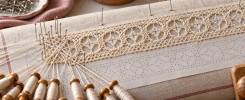
This November, The Lace Museum invites you to travel to the world of Belgian lace without leaving home. Their online course... Beginning Flanders It proposes four mornings of study to understand the delicate background of five holes in Flanders and then approach the richness of Binche, with its small snowflakes and its lines full of movement.
The program takes place on Tuesdays, November 3, 10, and 24, and December 1, 2026. Each session lasts three hours, from 9:00 AM to 12:00 PM Pacific Time. This corresponds to the afternoon in mainland Spain, although it's advisable to check the time difference before connecting, as the seasonal change doesn't occur on the same day in all countries.
The first class coincides with the start of the course, but there are still three sessions scheduled. Anyone discovering this opportunity now should check directly with the museum to see if it's still possible to join. Since this is a training program with ongoing support and progressive work, it's not advisable to assume that places will be available.
This is an intermediate-level course requiring a solid understanding of Torchon stitch. It's not an introduction to crossings and turns, but rather a step towards finer structures that demand careful reading of the stitch pattern, maintaining many orderly pairs, and controlling tension in a delicate mesh.
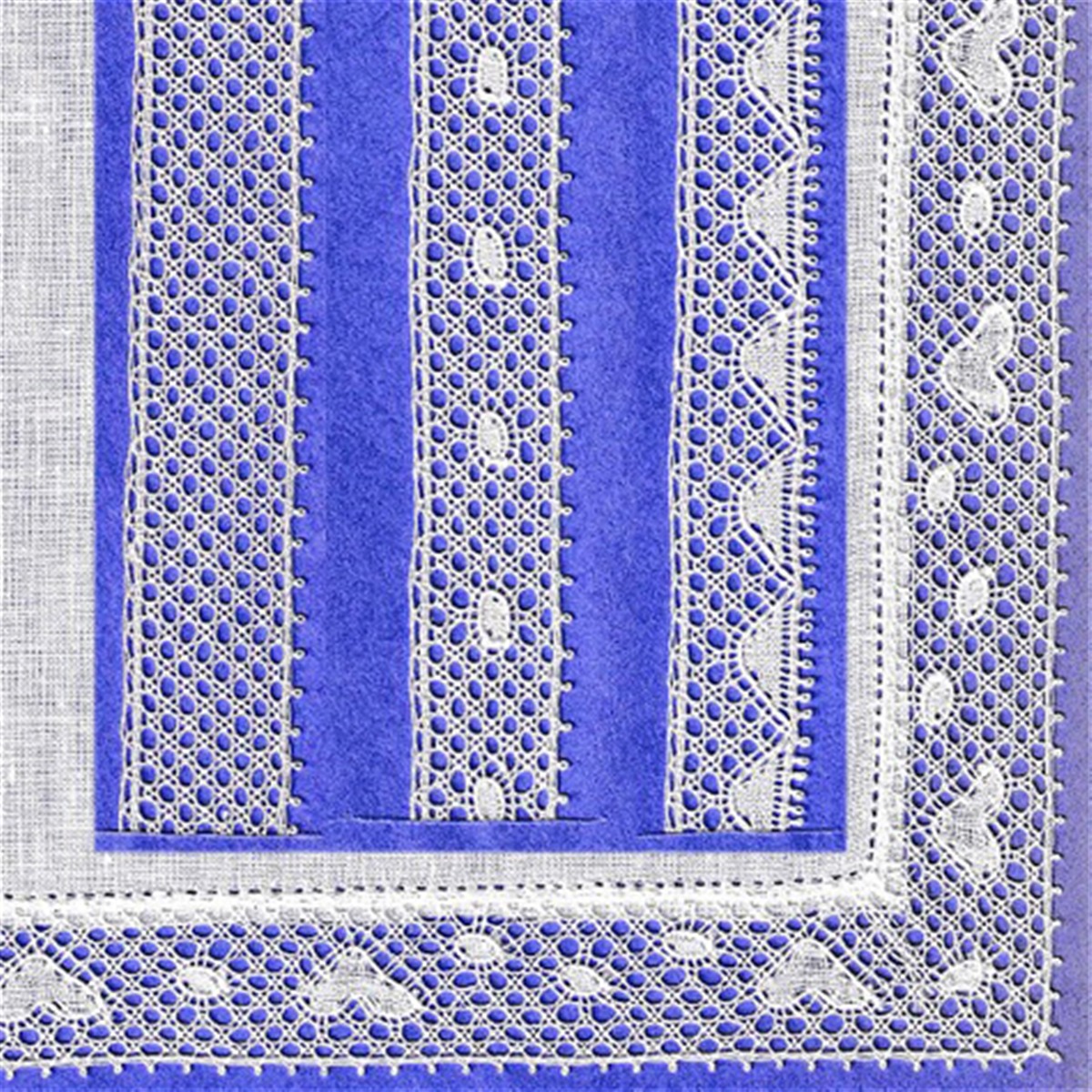
Flemish lace is recognized by its distinctive five-hole background. This network creates a light and even field on which the motifs appear to float. Learning it provides a useful foundation for exploring other Belgian laces, especially Binche. The instructor doesn't start from scratch: she expects participants to be able to work Torchon lace confidently and be prepared to observe how the logic of the background changes.
Binche brings together elements related to Flanders, Paris, and Valenciennes. He is famous for his snowy-looking backgrounds and the fluid way in which elements move across the surface. At first glance, a piece may appear as a cloud of details; upon closer examination, families of crosses, areas of greater density, and tiny figures that organize the light emerge.
This shift from Flanders to Binche transforms the course into something more than simply learning a single technique. It allows us to understand how a lacemaker uses familiar resources to construct a new language. The background supports the drawing, but it also participates in it: it separates, accompanies, and creates rhythm among the forms.
The training is led by Kathy Kauffmann. The Lace Museum organizes the class virtually, so students from different locations can share the same world without traveling to Fremont, California. A second camera, in addition to the main device, is required to follow the demonstrations. This allows the instructor to closely observe the work and help identify a swapped pair or uneven tension.
This technical detail makes perfect sense in bobbin lace. A verbal explanation can indicate the movement, but the actual position of the threads tells another part of the story. Showing the cushion from above allows for concrete instructions and makes online instruction feel more like a conversation around a table.
The registration fee is $120. The museum provides a list of materials that each participant must prepare before starting. A second camera is also required, and it is recommended to be proficient in Torchon, as class time is dedicated to Belgian techniques and not to reviewing the fundamentals.
Before registering, it's a good idea to check the time zone, internet connection, camera placement, and workspace. A lamp directed towards the bobbin lace, without casting harsh shadows, helps the instructor distinguish the threads. It's also helpful to have the bobbins separated and the materials within easy reach so you don't lose track of the demonstration.
Studying Flanders and Binche is to approach a tradition that transformed precision into lightness. Every tiny hole and every snowy figure is born from patient movements, but the result seems almost weightless. The screen eliminates geographical distance, but not the concentration that the work demands.
This course offers a wonderful opportunity for lacemakers who have already mastered Torchon and wish to expand their repertoire. Four Tuesdays, a well-lit cushion, and plenty of bobbins can be all it takes to open a door to two of Belgium's most delicate laces.
© El Mundillo de Eva 2026