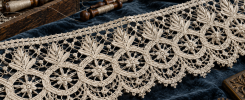
Krakow 2026: bobbin lace rebuilds a living tradition
Krakow 2026: bobbin lace rebuilds a living tradition
Krakow holds its history in churches, squares, and palaces, but also in much smaller gestures: crossing two pairs of threads, stretching them taut over a cushion, and letting a design emerge between the bobbins. On Saturday, October 24, 2026, the Krakow Museum invites you to contemplate this work up close in an evening dedicated to the reconstruction of the city's traditional lacemaking.
The meeting is titled From pattern to reconstruction. Krakow bobbin lace as a living art practiceIt will begin at 18:00 PM in the Fontany Hall, located on the first floor of the Krzysztofory Palace, at Rynek Główny 35, and will last approximately two hours.
The proposal combines research, public demonstration, and discussion. The opening will be hosted by the museum, followed by an introduction by curator Justyna Łukaszewska-Haberkowa. Specialists from the Centre for the Interpretation of Intangible Heritage will also participate, as well as the custodians of this tradition. The public will be able to see how the reconstruction of a piece is approached and learn about the decisions required to restore an ancient pattern to the cushion.
Admission is free, although the room has a limit of twenty people and reservations are required. Reservations can be made through the Visitor Information Center at the Museum of Krakow, by phone, or via the museum's information email. It's a small, intimate activity designed to encourage questions as part of the experience.
For someone who loves bobbin lace, the appeal lies precisely in that miniature scale. It's not just about admiring a finished piece, but about observing the reasoning behind it: why a braid changes direction, how to recognize a stitch in an old photograph, or what material can behave like the original.
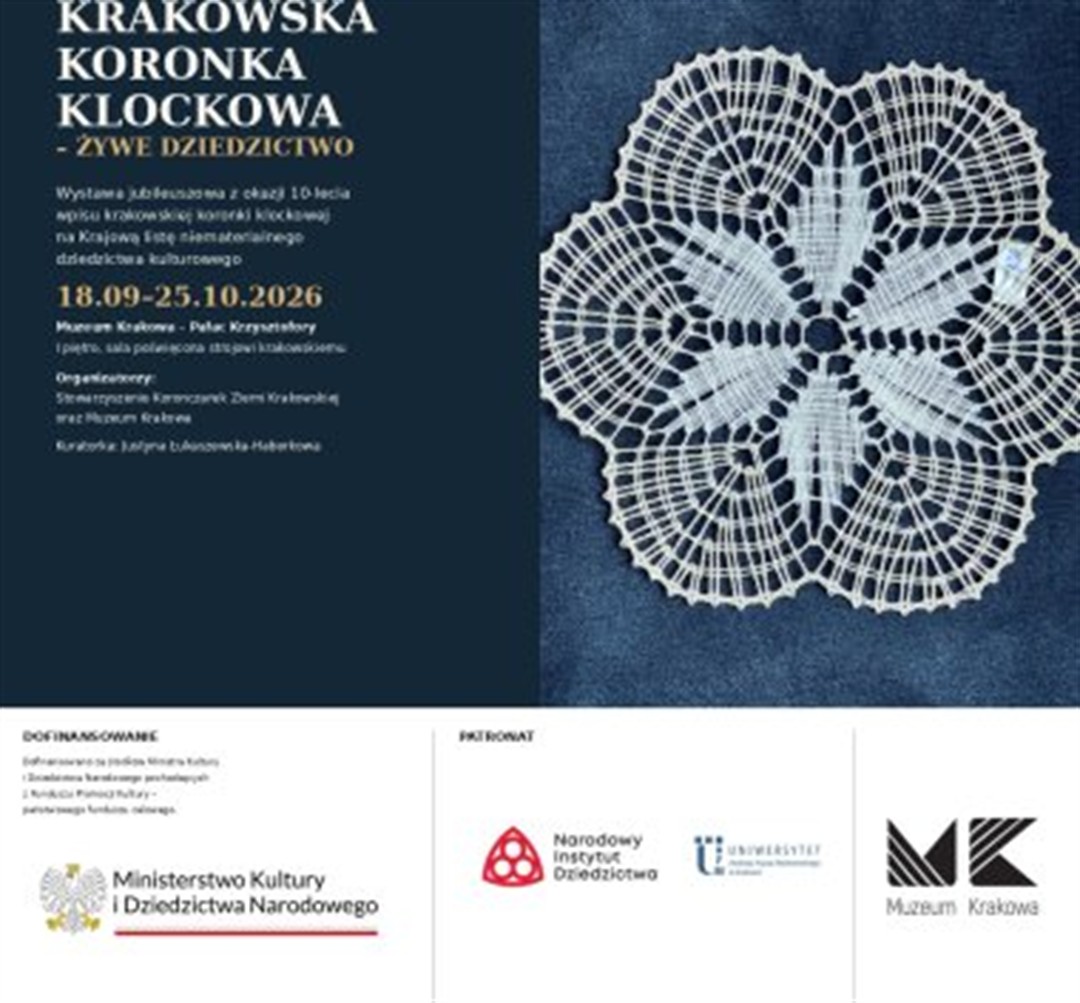
The event complements the exhibition. Krakow bobbin lace: living heritageThe exhibition, open from September 18 to October 25, 2026, celebrates the tenth anniversary of the inclusion of this practice on Poland's National List of Intangible Cultural Heritage.
This protection doesn't just refer to preserved lace, drawings, or tools. It recognizes a chain of knowledge passed down from one person to another: how to read the lace pattern, choose the thread, maintain tension, and solve each crossing. The museum presents contemporary works alongside historical patterns, reconstructions, and original designs to show that tradition can be preserved while simultaneously continuing to create.
Among the women who helped maintain and develop Krakow lace are Olga Szerauc, Zofia Dunajczan, and Jadwiga Węgorek. Maria Modés-Dudrewiczowa, former director of the Zakopane lace school, also holds a special place. Even after retirement, she continued her work in Krakow and published manuals on various techniques. Her studies now serve as a starting point for new research and reconstructions.
Simply copying the final appearance of a piece is not enough. To reconstruct lace, one must study the source, recognize the stitches, choose a suitable material, and discover the path each thread took. Sometimes an old drawing leaves questions unanswered, and the lacemaker must experiment, undo, and compare until a coherent solution is found. Practice thus becomes a way of investigating history.
The Krakow Region Lacemakers' Association currently comprises around twenty people, with about a dozen actively involved in the craft. They share knowledge in meetings and workshops, work on historical patterns, and develop contemporary designs. This learning cycle explains better than any display why we speak of living heritage.
The Krzysztofory Palace is located right on the Main Market Square, one of those places where every stroll reveals a story. The exhibition occupies a room on the first floor dedicated to Krakow costume and is included with admission to the permanent collection. Krakow from the beginning, without end.
Those visiting the city during those last days of October can combine the architecture of the square with a more intimate look at its culture. Behind the monumental facades, hands continue to tell the story with linen, wood, and patience. The evening of the 24th offers the opportunity to get up close to them and discover that reconstructing antique lace can also be a way of imagining its future.
© El Mundillo de Eva 2026