
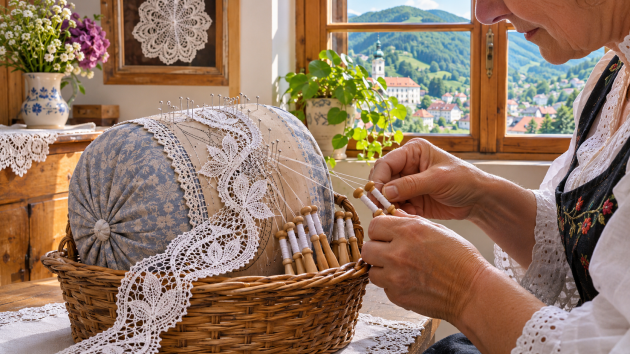
Idrija: the Slovenian lace that writes curves with a ribbon
Idrija lace transforms a ribbon of thread into curves and leaves, a Slovenian tradition recognized by UNESCO.
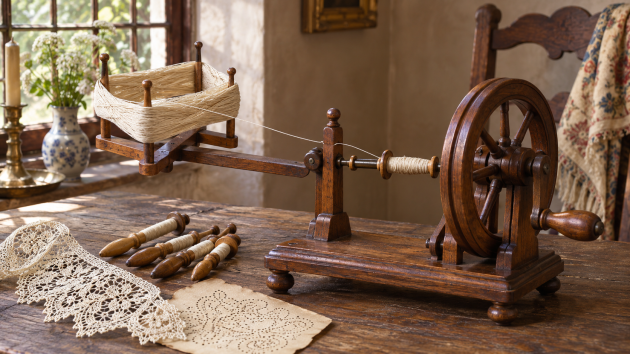
Bobbin winders: the wheel that prepared the thread before the first crossing
A bobbin winder from 1794 explains how lacemakers transformed a skein into bobbins ready to begin their work.
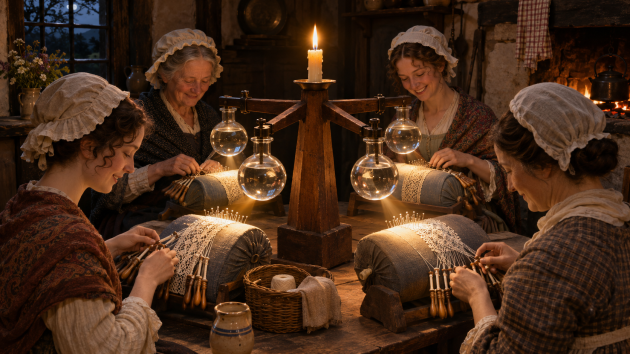
Lacemakers' lamps: a water globe to multiply the light of a candle
Before electricity, a candle and several water balloons concentrated the light on the cushions of the lacemakers gathered in a circle.
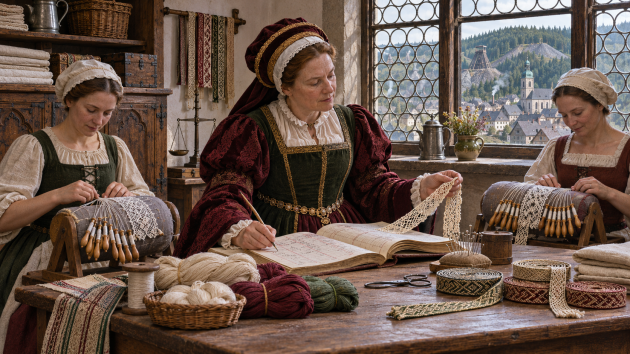
Barbara Uthmann: the textile entrepreneur whom legend turned into the inventor of lace
Barbara Uthmann doesn't need to have invented bobbin lace: her documented history reveals a businesswoman who turned textile work into an economic network.
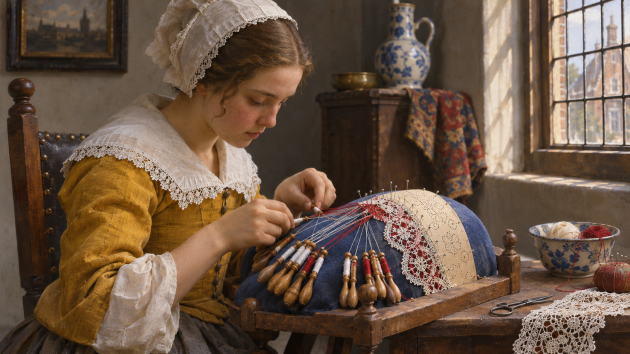
Vermeer's Lacemaker: A Moment of Bobbin Lace Frozen in 1670
Vermeer's Little Lacemaker transforms bobbins, threads, and a gesture of concentration into a scene that continues to speak to us more than three centuries later.
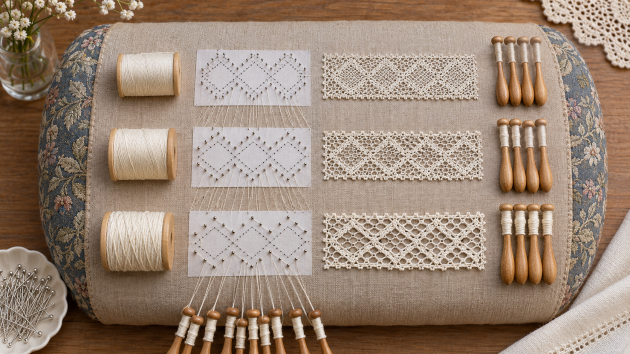
Thread and pricking: the couple that decides the density of the lace
The thickness of the thread and the distance between the holes in the lace must be in proportion so that the lace retains density, airiness, and a comfortable tension.
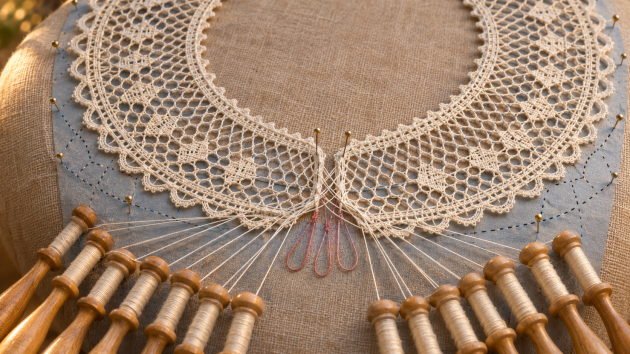
Magic threads: the trick to closing lace without leaving a trace
Magic threads are auxiliary loops that help to hide the ends and neatly join the beginning and end of bobbin lace.
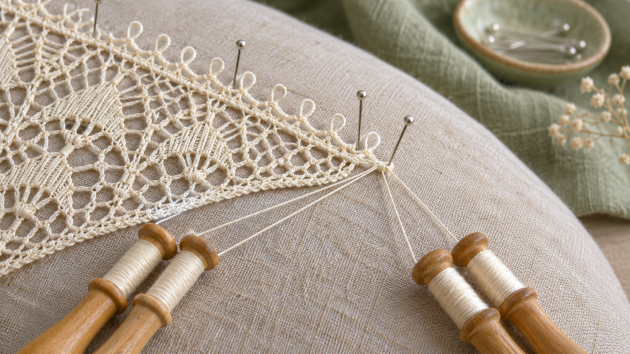
Picots: the small bows that add rhythm to the edge of the lace
Picots are small bows integrated into the lace that add rhythm to the edges, enrich the braids, and teach how to control tension.
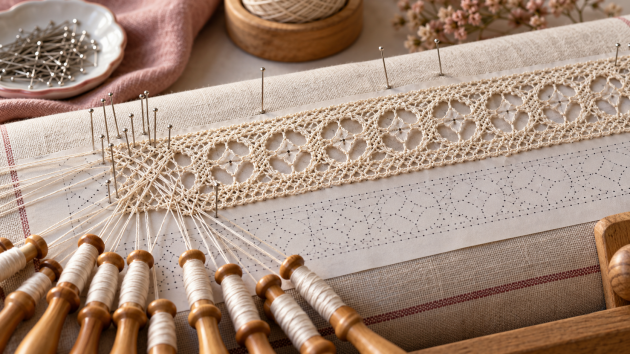
Roseground: the rose background that opens windows in the lace
The roseground transforms pairs of bobbins into a mesh of small roses that brings air, rhythm and light to Torchon lace.
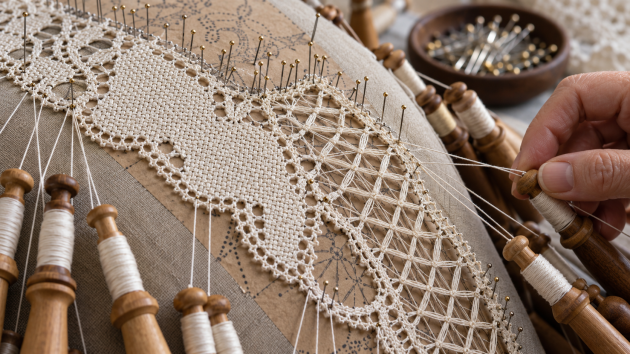
Whole stitch and half stitch: two rhythms that change the lace
Crossing and twisting four threads is enough to create whole stitch or half stitch, two textures that change the density, light and pattern of the lace.
